Differences Between TMS and ECT in Brain Stimulation
Brain stimulation represents a major category of interventions in neuroscience and psychiatry, evolving along different historical and conceptual pathways.
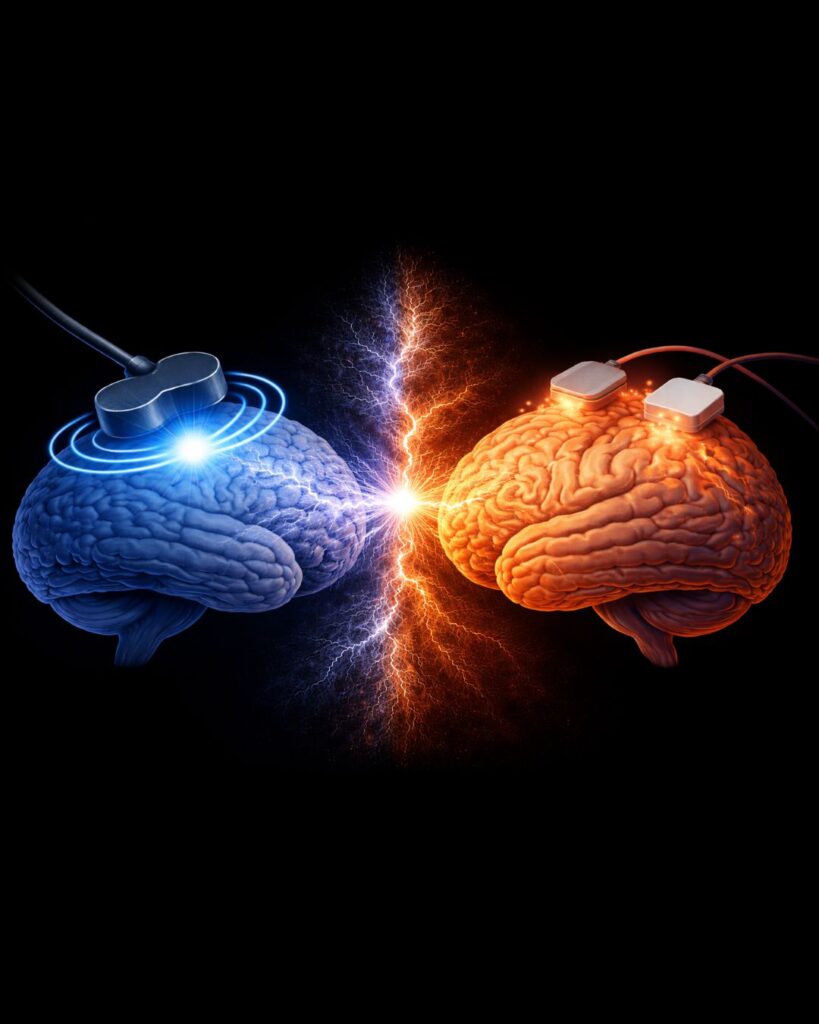
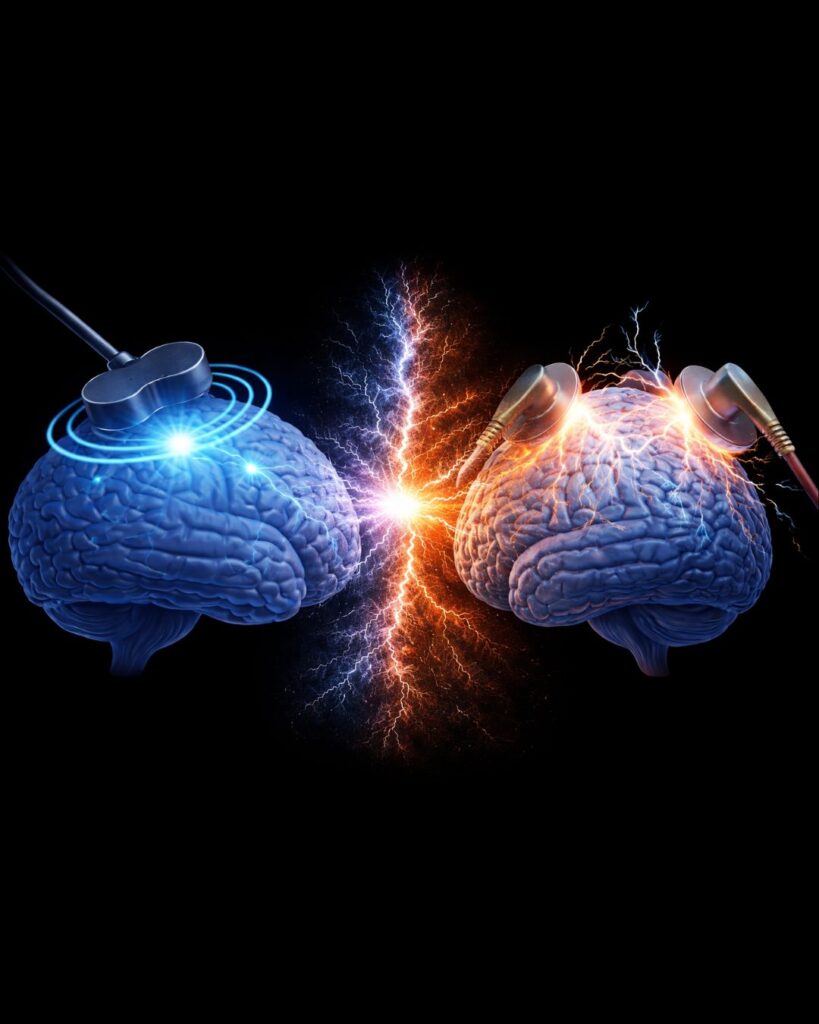
Among these approaches, Transcranial Magnetic Stimulation (TMS) and Electroconvulsive Therapy (ECT) are two fundamentally distinct methods.
Although both aim to modulate brain activity, they differ substantially in therapeutic philosophy, degree of invasiveness, neurophysiological mechanisms, and clinical outcomes.
Introduction
Over the past decades, various brain stimulation techniques have been developed to influence neural function in psychiatric and neurological disorders.
While TMS and ECT are sometimes grouped together in non-specialist discussions, from a scientific perspective they represent two separate paradigms of brain intervention.
ECT is one of the earliest biological treatments in psychiatry, whereas TMS reflects advances in modern neuroscience, physics, and biomedical engineering.
Understanding the differences between these methods is essential for clinical decision-making, research design, and accurate communication with patients.
What Is TMS? (Transcranial Magnetic Stimulation)
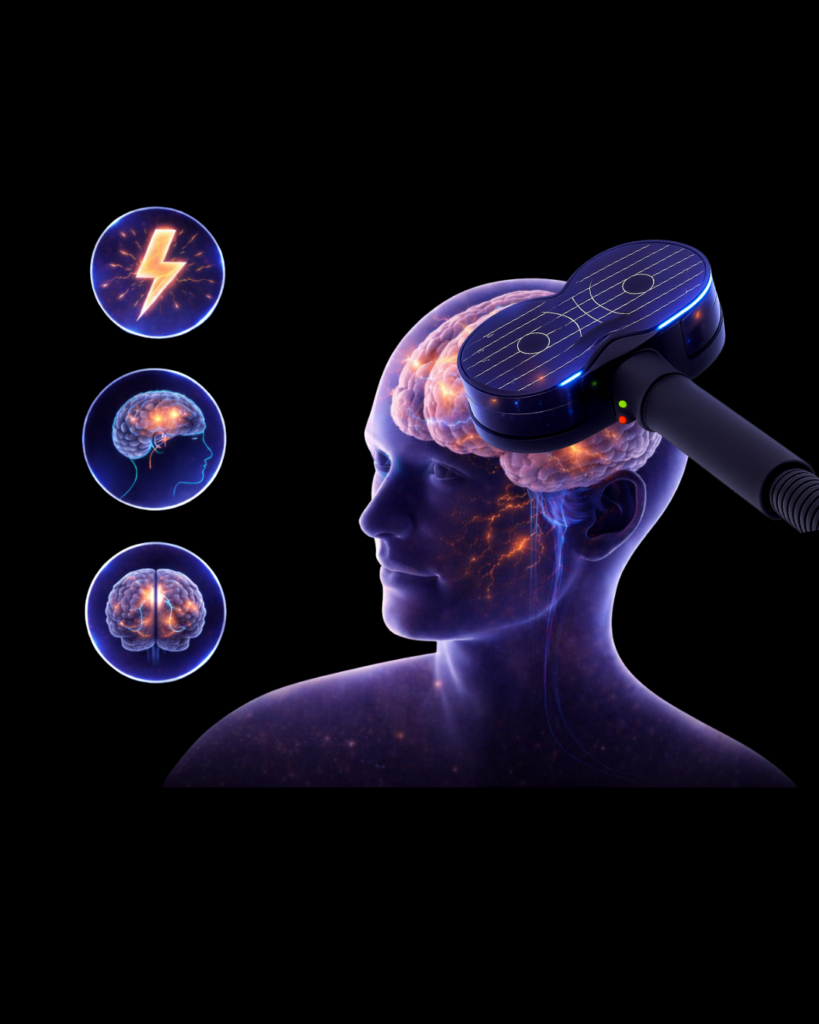
Transcranial Magnetic Stimulation is a non-invasive technique based on the principle of electromagnetic induction, performed without inducing seizures.
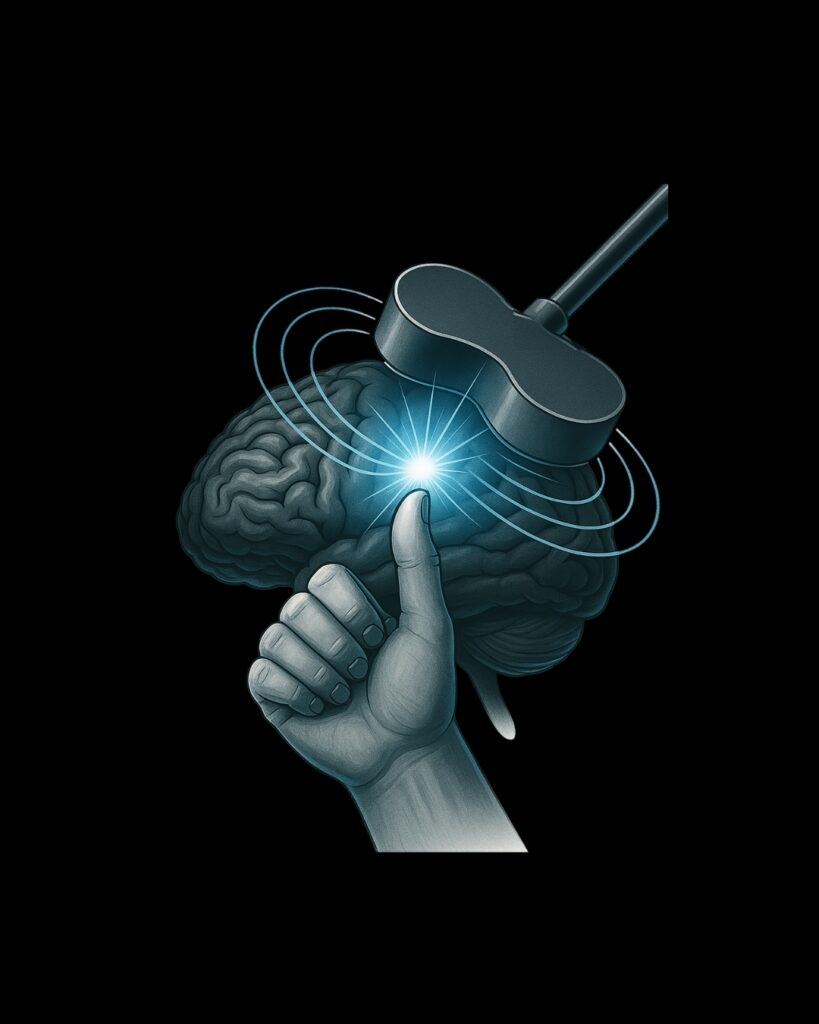
Brief magnetic pulses generate localized electrical currents in the cerebral cortex, enabling targeted modulation of neuronal activity.
Conceptually, TMS focuses on precise, region-specific regulation of neural networks, rather than producing a global brain response.
This characteristic has positioned TMS as a valuable tool in both neuroscience research and clinical practice.
What Is ECT? (Electroconvulsive Therapy)
Electroconvulsive Therapy is a medical procedure in which a controlled electrical current is applied to the brain to induce a generalized seizure.
ECT is performed under general anesthesia and with muscle relaxants to ensure patient safety.
The therapeutic effects of ECT arise from widespread neurobiological changes following the induced seizure, affecting large-scale brain networks and neurotransmitter systems.
Unlike TMS, ECT does not involve focal or region-specific stimulation; instead, the entire brain is engaged simultaneously.
Differences in Mechanisms of Action
From a neurophysiological perspective, the mechanisms of TMS and ECT are fundamentally different:
-
TMS modulates neuronal activity through localized electromagnetic induction, allowing controlled and targeted effects.
-
ECT produces a generalized seizure, leading to broad activation and reorganization of neural networks across the brain.
These mechanistic differences form the foundation for variations in safety profiles, cognitive effects, and patient experience.
Level of Invasiveness and Treatment Conditions
TMS
-
Performed without anesthesia
-
The patient remains fully conscious during sessions
-
Typically delivered in outpatient settings
-
Patients can return to daily activities immediately after treatment
ECT
-
Considered a more invasive medical intervention
-
Requires general anesthesia and hospital-based monitoring
-
Post-treatment recovery is necessary
-
Involves systemic physiological effects beyond the brain
Patient Experience and Clinical Outcomes
The distinction between TMS and ECT extends beyond efficacy to include patient experience and physiological burden.
Consciousness and Patient Participation
TMS is administered while the patient is fully awake, enabling repeated sessions and ongoing adjustment of stimulation parameters.
In contrast, ECT is performed under anesthesia, and the patient does not actively participate in the treatment process.
Physiological Burden
TMS primarily affects localized cortical regions and typically imposes minimal systemic stress.
ECT, through seizure induction, produces widespread physiological responses involving cardiovascular, neurological, and hormonal systems.
Pain, Discomfort, and Secondary Effects
During TMS sessions, some patients report mild scalp discomfort or tapping sensations, usually transient and well tolerated.
ECT does not cause pain during the procedure due to anesthesia; however, post-treatment effects such as headache, muscle soreness, or confusion may occur, primarily related to the seizure and anesthesia rather than the electrical stimulus itself.
Cognitive Effects After Treatment
TMS is generally not associated with significant cognitive impairment, and some studies report neutral or even positive cognitive effects.
ECT, however, may be accompanied by short-term memory disturbances and, in some cases, transient retrograde amnesia, directly linked to its seizure-based mechanism.
Clinical Role and Evidence Base
Both TMS and ECT have defined roles in clinical practice, but in different contexts:
-
TMS is regarded as a modern, non-invasive, and targeted intervention for specific clinical indications.
-
ECT is primarily reserved for severe, acute, or treatment-resistant conditions where rapid and robust effects are required.
Selection between these methods depends on symptom severity, previous treatment response, medical status, and safety considerations.
Conclusion
TMS and ECT represent two fundamentally different approaches to brain stimulation.
TMS reflects a targeted, non-invasive strategy with high tolerability and regional specificity.
ECT is a powerful but more invasive intervention, appropriate for selected clinical scenarios.
A clear understanding of these differences supports informed clinical decisions, responsible research design, and transparent communication with patients.
| Feature | TMS | ECT |
|---|---|---|
| Mechanism of Action | Localized magnetic stimulation without seizure | Controlled induction of a generalized seizure |
| Invasiveness | Non-invasive | Medically invasive procedure |
| Anesthesia | Not required – patient remains fully awake | General anesthesia is required |
| Spatial Precision | Focal and region-specific | Widespread and whole-brain |
| Cognitive Side Effects | None | Possible temporary memory impairment |
| Recovery Requirement | No recovery period needed | Recovery period required after each session |
| Treatment Setting | Outpatient — performed in clinic | Typically inpatient or hospital-based |
| FDA Approval | Yes | Yes |